Featured Post

Steffany and Kevin’s ‘Joy, Beauty, and Meaningful Simplicity’ Romantic Wedding in Costa Rica by Olivo Film
Steffany and Kevin chose the lush setting of Terrazas Flamingo in Costa Rica for their...


Steffany and Kevin chose the lush setting of Terrazas Flamingo in Costa Rica for their...
2
Sep
2026

By Boho
A short engagement changes the wedding-dress question. Style still matters, but the decisive inventory is time: time for the dress to ship, time to exchange it if the size is wrong, time for a tailor to evaluate it and time to correct anything discovered at the first fitting.
The most reliable strategy is to buy a dress that already exists in the required size and needs limited structural change. That may be an in-stock bridal gown, a returnable fashion dress, an off-the-rack sample or a local store purchase. A made-to-order promise can sound fast while leaving no margin for customs, production variation or alterations.
David’s Bridal leads this list because its ready-to-ship filtering, stores and alteration service can compress several handoffs. It is not automatically the most stylish choice for every ceremony. The other retailers become stronger when the desired look is lighter, more fashion-led or available as standard ready-to-wear.
The fastest checkout is not always the safest timeline. These options are organized by the work remaining after the box arrives.
Count backward from the final fitting. Shipping is only one segment of the dress timeline.
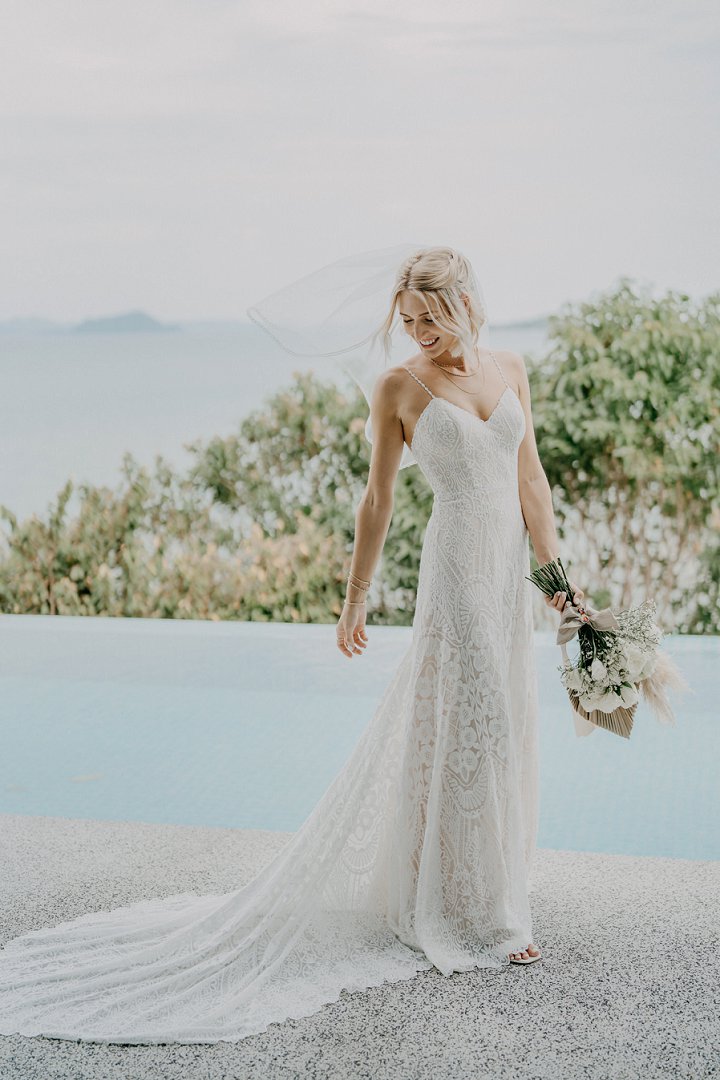
Ready-to-ship must describe the exact style and size, not merely the retailer’s general fulfillment model.
Start with the wedding date and reserve the final week for pressing, transport and emergencies. Before that, allow time for a final fitting and pickup. Before that comes alteration work, which may require more than one appointment. Only the remaining time is available for shopping, shipping, returns and reordering.
If the total runway is under three months, ask a tailor about availability before ordering the dress. If it is under six weeks, prioritize a close fit and simple hem over a gown that needs bodice reconstruction. If it is under two weeks, shop locally or choose a returnable ready-to-wear dress that can be worn with minimal changes.

David’s Bridal comes first when the calendar is tight because the retailer explicitly maintains a ready-to-ship and in-stock wedding-dress path, alongside stores, appointments and alterations. A recent short-engagement guide also separates available-now shopping from conventional bridal ordering.
The benefit is fewer handoffs. You can identify fast inventory online, call a store about the exact style and size, and ask whether the alteration department can meet the date. Do all three before paying. “In stock” describes the garment; it does not guarantee the fitting schedule.
For the safest purchase, choose a dress that fits the bust and waist without major reconstruction. Hem, straps and a straightforward bustle may be manageable; changing a heavily structured neckline or resizing a beaded bodice is a different project.
Anthropologie Weddings offers wedding gowns and fashion-forward ceremony dresses through a conventional e-commerce model. This is valuable on a short engagement because eligible stock ships as finished merchandise rather than entering a long production queue.
Read the bridal collection alongside the returns policy. Confirm the delivery estimate for the exact size and whether the dress is final sale. If two sizes are genuinely plausible and the policy permits, ordering both can be faster than guessing and waiting for an exchange—but return them carefully and promptly.
Lulus’ bridal collection is best for shoppers comfortable with ready-to-wear construction, lighter fabrics and less formal silhouettes. The dresses can work for courthouses, beaches, intimate ceremonies and receptions, and the stocked-apparel model removes made-to-order uncertainty.
The tradeoff is support and finish. A low price and fast shipment do not create internal structure. Read customer photographs for length, opacity and bust fit, then plan a local fitting immediately. A skilled hem and careful steaming can elevate a simple gown; adding a completely new corset usually defeats the purpose of this route.

ASOS has a dedicated wedding-dress category and many white occasion dresses outside it. It is useful when the dress needs to arrive quickly and the shopper is open to minis, slip dresses, sleeves or nontraditional silhouettes.
Check delivery estimates by destination, not by the promise shown before entering an address. Inventory moves quickly, so avoid building the wedding around an item with only one unit left unless you have a backup. Try the dress on over the intended undergarments the day it arrives.
Nordstrom offers designer evening gowns, white dresses and some bridal options under a standard retail model. Its service advantage is access to special-occasion alterations in participating stores.
This is a good route for a city ceremony or formal event where a designer evening gown can do the work of bridal. Call the alteration department before ordering to ask about lead time and whether the fabric or embellishment requires a specialist. Appointment capacity, not delivery, may be the limiting factor.
Revolve’s bridal gown edit serves a fashion-forward shopper who wants stocked pieces, close silhouettes and party-aware design. It is especially relevant when one dress must move easily from ceremony to reception or when a second look is being considered as the backup.
Many styles fit like fashion dresses rather than traditional bridal gowns. Examine stretch, lining and garment length. Keep tags on during a clean indoor fitting and verify return eligibility before ordering multiple options.

Reformation’s bridal collection is a natural fit for smaller weddings, destination ceremonies and brides who prefer a fluid, fashion-first look. Stocked dresses can be faster than salon production, but popular sizes may sell out.
Bias-cut and slim dresses are sensitive to undergarments and exact body measurements. They may need less construction work but more precise length and seam fitting. Order early enough to test the dress while walking and sitting, not only standing still.
Self-Portrait’s wedding collection often includes embellished midis, tailored minis and full-length white dresses. It can solve a short-timeline brief when the shopper wants visual detail without traditional bridal production.
Embellishment complicates alterations, so prioritize a size that fits through the most decorated areas. Shortening a clean hem is different from moving a scalloped lace border or beaded edge. Ask a tailor before relying on an ambitious change.
Shopbop’s bridal dress edit brings together contemporary designers, allowing a shopper to compare minis, columns and unusual ceremony dresses without a salon order.
The best use is a clearly defined fashion brief. If you know you want a one-shoulder column or tailored mini, the edit is efficient. If you need extensive support, customization or a traditional train, a specialist route is safer.
Stillwhite can provide an immediately available designer gown, including unworn, sample and preowned pieces. It is tempting on a short engagement, but the marketplace introduces seller response, condition and measurement risk. Review how it works and buyer protection, then ask for current measurements and alteration history.
This route becomes rational when you have already tried the exact designer and style, the listed measurements are safely workable and the seller can document condition and dispatch. It is a poor last-minute gamble when the gown would need to be rebuilt.

On a compressed schedule, a manageable hem is safer than a gown that requires structural bodice reconstruction.
Minor strap adjustment, a simple unembellished hem and basic pressing are often the most compatible with a compressed schedule. They still require a tailor’s confirmation.
A bustle, side-seam adjustment, cup change or multiple-layer hem can require more time and more than one fitting. Lace placement and skirt volume affect complexity.
Changing a neckline, rebuilding corsetry, resizing by several sizes, restoring damaged beadwork or replacing a zipper near dense embellishment can consume the entire margin. A bargain that requires structural work is not a fast dress.

Open the parcel in a clean room and record the unboxing if condition matters. Confirm the label, size, color and all detachable pieces. Try the dress with intended undergarments and shoes. Inspect the zipper, hooks, seams, hem and embellishment. Photograph every angle in daylight. Then contact the tailor immediately, even if the dress appears close.
Do not wait for friends to be available before discovering a wrong size or damaged hem. A celebratory reveal can happen later; the return clock starts at delivery.
On a very short timeline, a backup is risk management rather than pessimism. It can be a returnable white ready-to-wear dress already in your closet, a tailored suit or a simple gown that needs no structural work. Keep accessories and shoes flexible enough to work with either option until the primary dress passes its final fitting.

Reporting note: Delivery estimates, stock, return windows and alteration capacity are volatile. Confirm the exact item, destination and appointment availability on the day of purchase.

This site uses Akismet to reduce spam. Learn how your comment data is processed.


Comments