Featured Post

Jessica and Joseph’s Summer Farm Wedding in Hertfordshire by Tom Keenan Photography
It’s hard to remember the summer, it seems such a long time ago, especially as...


It’s hard to remember the summer, it seems such a long time ago, especially as...
15
May
2026

By Boho
In 2026, the bridal shop has become a destination in its own right. Brides are travelling for the buy; flying into New York for Danielle Frankel, London for Browns Bride, Paris for a single appointment at a designer’s own atelier. Why? Because the shop, not just the dress, is part of the decision.
This guide covers the bridal shops leading that shift in New York: where to find them, which designers they stock, and what to expect from an appointment.
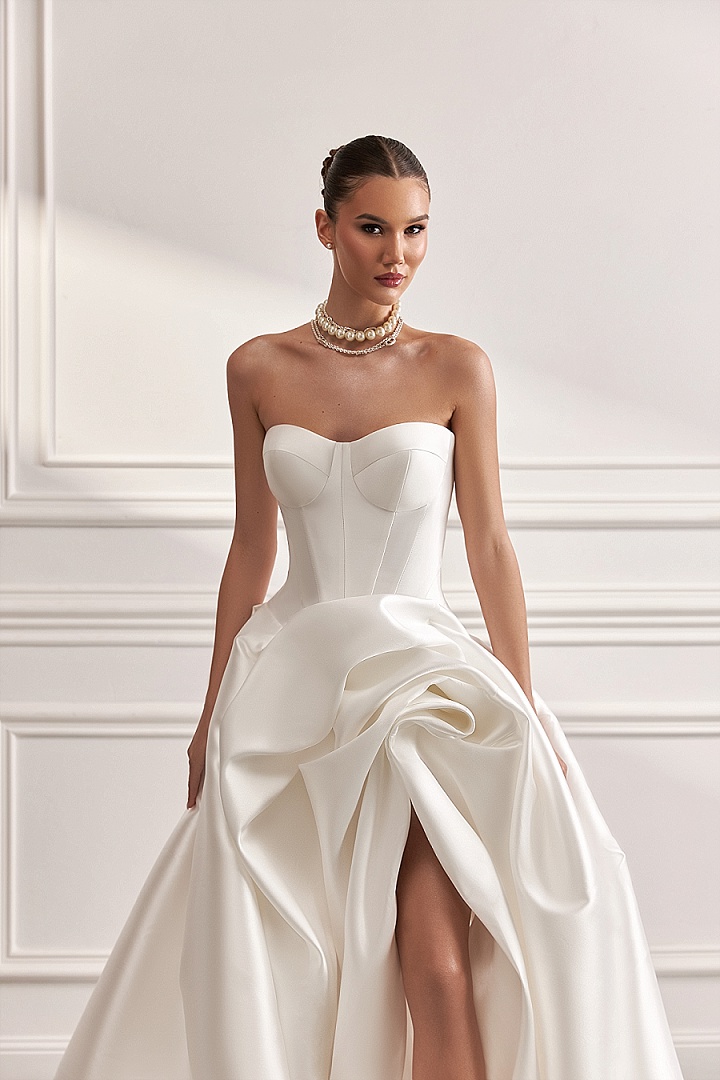
No other city concentrates serious bridal craftsmanship the way New York does. The Garment District remains the operational heart of American bridal couture, and the majority of houses on this list still pattern, cut, and construct their gowns within a few blocks of one another in Midtown.
What this means in concrete terms, is that master patternmakers, in-house seamstresses, and bead-and-embroidery specialists are working under the same roof as the designer, not contracted out across continents. For brides who care about provenance, and who want to know where their gown was made and by whom, New York remains perhaps the only American city that can answer that question in full. It is also, simply, where the ateliers are. A half-mile walk on the Upper East Side or in SoHo can take in three or four of the most directional bridal designers working today.
| Boutique | Location | Starting Price | Best Known For |
| 1.Danielle Frankel | 260 W 39th St, NYC and 8475 Melrose Place, Los Angeles, CA 90069 | From $3,950 | Modern, architectural bridal with editorial minimalism |
| 2.Monique Lhuillier | 818 Madison Ave, NYC | On request | Romantic florals and red-carpet glamour |
| 3.Reem Acra | 501 Fifth Ave, NYC | On request | Embroidered, ornate couture gowns |
| 4.Romona Keveza | One Rockefeller Plaza, NYC | On request | Old-Hollywood elegance and structured silhouettes |
| 5.Amsale | 150 Wooster St, SoHo | From $4,200 | Clean-lined, modern-classic bridal |
| 6.Lela Rose | 550 7th Ave, NYC | From $6,000 | Sculptural made-to-order with garden-romantic mood |
| 7.Galia Lahav | 155 Wooster St, SoHo | From $6,000 | Hand-embroidered couture with European fabrications |

Of all the houses on this list, Danielle Frankel is the one rewriting what a contemporary bridal gown can look like. Founded by Parsons-trained designer Danielle Frankel Hirsch, who refined her craft at Vera Wang before launching her own label, the house is situated in the New York Garment District.
The aesthetic is architectural; modern without being austere: think dip-dyed ombrés, sculptural pleating, woven silk-and-metal textiles, and corsetry that flatters rather than constricts. Frankel’s designs have been worn by Alexandra Daddario, Alex Cooper and Charli XCX, to name a few.
A long-established American luxury house with flagships in New York and Los Angeles, Monique Lhuillier built her reputation in the late 1990s and early 2000s on red-carpet dressing and traditional, romantic bridal silhouettes.
A Beirut-born, FIT-trained designer whose Fifth Avenue atelier has been a fixture of New York bridal since the late 1990s, known for embroidered, ornamental gowns drawing on Lebanese textile traditions.
A New York designer who launched her bridal house in 1999, known for old-Hollywood silhouettes, structured construction, and a flagship in the penthouse of One Rockefeller Plaza.
A New York bridal house founded in 1985 by the late Ethiopian-American designer Amsale Aberra, widely credited with introducing the modern minimalist wedding dress and now operating from a SoHo flagship.
A Texan-born, New York-based designer whose bridal collection is made-to-order from a 7th Avenue atelier, with an aesthetic rooted in garden florals and feminine tailoring.
The American flagship of the Tel Aviv-founded couture house, set in an 8,000-square-foot SoHo space and known for heavily embellished, figure-conscious gowns favoured by celebrity brides.

The mark of a serious bridal house is simple: it’s whether the gown is actually designed, patterned, and constructed in the same building you’re standing in, or whether it’s been outsourced to a factory thousands of miles away. Ask where the dress is made; ask whether the patternmakers and seamstresses work in-house. The answers tell you almost everything about what you’re paying for. Here are some other questions to consider:

How far in advance should I order a luxury wedding gown?
Most made-to-order houses recommend booking nine to twelve months ahead of the wedding date, with custom commissions ideally beginning twelve to eighteen months out. The timeline accounts for fabric sourcing, patternmaking, construction, and a minimum of two to three fittings. Shorter timelines are sometimes possible, particularly with collection pieces that can be cut quickly, but they tend to come with rush fees and a narrower window for fit refinement.
What’s the difference between made-to-order and custom bridal?
Made-to-order means an existing design from a designer’s collection is cut and constructed in your size. The silhouette, fabric, and details are already determined. Custom means the gown is designed from scratch in collaboration with the designer, with every element decided through the design process itself. Custom commissions are typically two to four times the price of made-to-order pieces from the same house, and the process is closer to a couture commission than a retail transaction.
Can I commission a luxury bridal gown if I don’t live in New York?
Yes. Most serious New York ateliers now run their consultation phase remotely. Initial design conversations, sketches, fabric swatches, and even some measurements can be done over video. Fittings, however, need to happen in person at the atelier, so most out-of-town brides plan two to three trips to New York during the construction process. Houses experienced with international clients will often consolidate these into longer visits.
Are luxury bridal gowns worth the price tag?
The honest answer depends on what you’re paying for. A gown made in a New York atelier by master patternmakers, in handwoven or specialist fabrications, with multiple in-person fittings, is a different object from a factory-produced bridal dress at a fraction of the price. For brides who care about craft, fit, and provenance, the answer is generally yes. For brides who want a beautiful dress for one day and don’t prioritise where or how it was made, it isn’t.
What’s the most important question to ask at a bridal appointment?
Where is the dress made, and by whom. The answer separates the genuinely couture houses from the ones using couture as marketing language. A house that can name its patternmakers and walk you through its atelier is operating at a different level from one that quietly outsources construction. It’s a question every bride is entitled to ask, and the response tells you almost everything you need to know.
Share this post



This site uses Akismet to reduce spam. Learn how your comment data is processed.


Comments