Featured Post

Why Your Wedding Needs a QR Photo Album (and What You’ll Miss Without One)
Ask any couple what they remember about their wedding, and you’ll often get the same...


Ask any couple what they remember about their wedding, and you’ll often get the same...
14
Aug
2026

By Boho
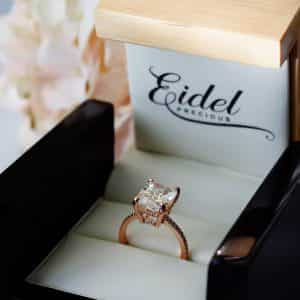
You’ve probably heard strong opinions in both directions if you’ve started looking at engagement rings. Diamond loyalists point to tradition, durability, and universal recognition. Sapphire advocates point to colour, individuality, and heritage. Both camps have real points to make, and the reality is that both stones have genuine merit as engagement stones. What matters when you’re actually choosing is which qualities matter most to you and the person you’re marrying. This piece walks through three specific dimensions that come up repeatedly in bridal conversations. Durability, cost, and symbolism. Comparing the two stones honestly on each helps you understand the trade-offs involved and make a decision that suits the ring you want on your finger for the next fifty years.


The Mohs hardness scale is the standard measure of gemstone scratch resistance, and it’s the starting point for any durability comparison. Diamonds sit at ten, the highest possible rating, which gives them the best scratch resistance of any gemstone. Sapphires sit at nine, close behind and well above the point at which everyday durability becomes reliable for daily wear across decades. The one-point difference sounds significant, and in a strictly technical sense it is, but in practical terms both stones will retain their polish and integrity through a lifetime of ordinary wear when set well and looked after reasonably.
Hardness only tells part of the story. Toughness, which measures resistance to chipping and breaking under impact, matters too. Diamonds can chip along their internal cleavage planes despite their exceptional hardness, particularly if struck at the wrong angle against a hard surface. Sapphires have no such cleavage weakness. They handle impact well and are less prone to the specific type of damage that occasionally affects diamond rings worn during physical activity.
Setting choice matters for both stones and can meaningfully extend the practical life of any centre stone. Bezel settings offer the most protection, wrapping metal around the stone’s edges to guard against knocks. Prong settings expose more of the stone to light but also to potential impact. For either stone, choosing a setting appropriate to how the ring will actually be worn is the practical decision that most affects long-term durability.


The two stones sit in quite different market structures, which shapes how they’re priced and shopped for. Diamonds are priced through the standardised grading system built around the four Cs, with values scaling predictably with carat weight, cut quality, colour grade, and clarity grade. That standardisation makes diamonds easy to compare directly across sellers, which is a real advantage for couples who want to know they’re paying a fair price for a specific quality tier.
Sapphires are priced across a wider range, with factors including origin, colour intensity, treatment history, and cut all influencing value in less standardised ways. Untreated stones from recognised sources command higher prices, while sapphires that have undergone standard heat treatment sit at more accessible price points while retaining their beauty. On a per-carat basis, comparable-quality sapphires typically cost less than white diamonds of equivalent size. That difference gives couples more visual impact per dollar, which matters if you want a larger or more distinctive centre stone within a set budget.
The economics of ethical sourcing also come into play. Traceable stones from responsibly operated mines often come at a modest premium across both categories, and many couples find that premium worthwhile for the peace of mind that comes with it. The sapphire market spans genuine luxury pieces through to more accessible options while retaining strong quality across the range, giving couples real flexibility to find something that suits both their aesthetic and their budget.


The symbolic weight each stone carries is different in origin and character. Diamonds have been positioned as symbols of enduring commitment through decades of coordinated marketing, most famously the twentieth-century campaign that gave us the phrase we still hear today. The clarity and colourlessness of a well-cut diamond have been read as purity and perfection, and that association is now deeply embedded in cultural expectation across most of the world. When you choose a diamond, you’re stepping into that established symbolic frame.
Sapphires carry a different symbolic history, one that predates the modern diamond era by centuries. They have been associated with wisdom, faithfulness, and integrity across cultures for a very long time, and their blue colour in particular has symbolic ties to loyalty, truth, and the depth of considered feeling. Sapphires appeared on royal and noble engagement rings for centuries before the diamond took over the category, and their return to visibility through Diana’s engagement ring, now worn by Catherine, has reinforced their contemporary meaning as stones tied to lasting commitment and thoughtful choice.
Which set of associations resonates more comes down to what you and your partner want the ring to say. A diamond speaks to universal recognition and cultural continuity. A sapphire speaks to considered heritage, colour, and a specific set of qualities that have carried symbolic weight far longer than any twentieth-century campaign.


Bringing the three dimensions together in a practical way clarifies the decision. Couples who prioritise absolute maximum durability, the standardised comparable value structure that comes with the four Cs, and the universal cultural recognition of the diamond may find the traditional choice suits them well. Couples drawn to colour, deeper heritage, clearer paths to ethical sourcing, and more visual impact per dollar often find sapphires suit them better.
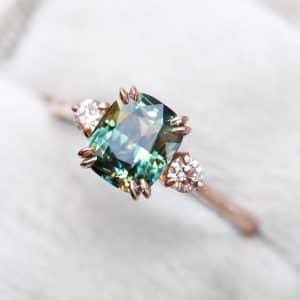
Neither choice is objectively better. The right ring is the one that reflects the couple wearing it, made from a stone that carries the qualities and meaning that matter to them. For couples exploring the coloured stone path, ethically sourced sapphire engagement rings offer real range across colour, setting style, and budget, giving genuine scope to find a piece that feels personally chosen rather than defaulted into.

This site uses Akismet to reduce spam. Learn how your comment data is processed.



Comments