Featured Post

Ask The Experts: A Caribbean Cruise Honeymoon Guide
A Caribbean cruise honeymoon often works best when couples treat the ship simply as a...


A Caribbean cruise honeymoon often works best when couples treat the ship simply as a...
23
Mar
2026

By Boho
Not every couple wants their honeymoon to revolve around pool loungers and hotel buffets. Some prefer somewhere that asks a little more of them, places where the scenery changes quickly, where getting around involves boats, hiking paths, or long drives, and where each day feels slightly different from the last.
An adventure honeymoon doesn’t mean roughing it the whole time. It just means choosing destinations where exploring naturally fills the day. From jungle-covered mountains in Southeast Asia to volcanic islands in the Atlantic, these are places where newlyweds can share a trip that feels memorable for the right reasons.
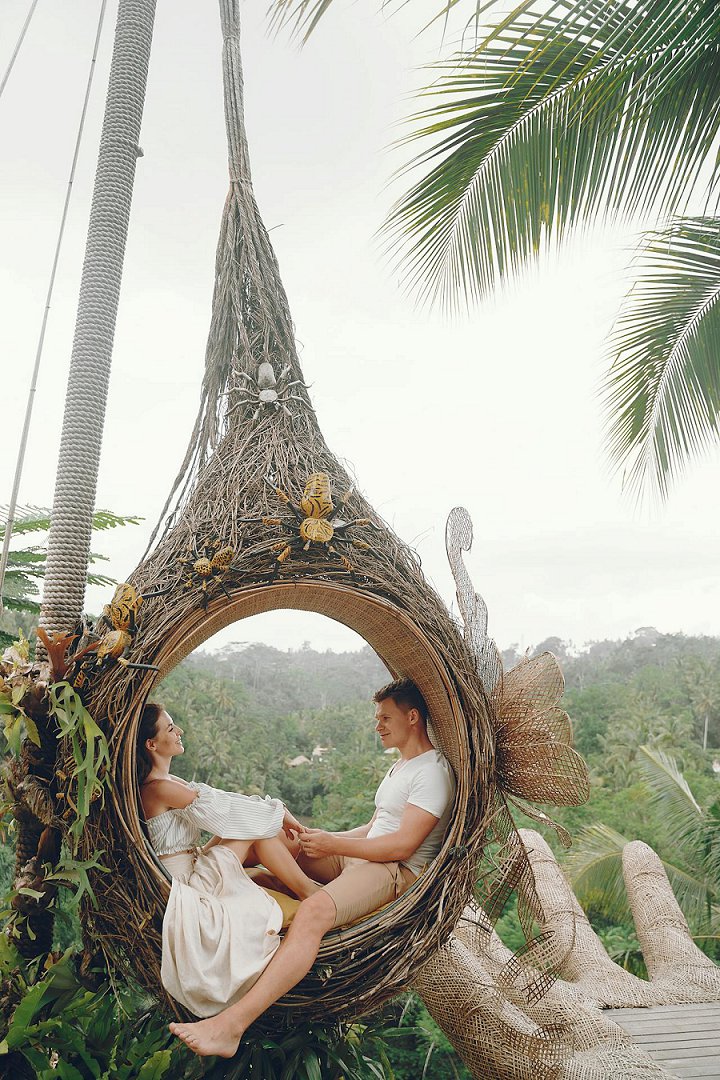
Vietnam suits couples who like variety. Within a couple of weeks, the country shifts from limestone karst landscapes in the north to tropical rivers and floating markets in the south.
Hanoi is usually where the journey begins. The Old Quarter is compact enough to explore on foot, and wandering along Hang Bac and Hang Dao streets quickly shows how the city still functions around traditional trade routes. Hoan Kiem Lake becomes a useful reference point for navigating the surrounding neighbourhoods before heading toward Dong Xuan Market in the northern part of the district.
Many travellers move from Hanoi toward Ha Long Bay or Lan Ha Bay. Boats leave from the port town of Tuan Chau, and once you’re out among the limestone islands, the scale of the place becomes clearer. Kayaking through the smaller lagoons or walking up the steps on Ti Top Island gives a better sense of the geography than viewing it from the deck alone.
Couples planning a longer honeymoon can refer to resources that help inspire 3 week holiday ideas, particularly when combining Vietnam with nearby countries such as Cambodia or Laos. A three-week route might begin in Hanoi, continue south through Hue and Hoi An, then finish in Ho Chi Minh City. Travelling this way allows time to move gradually throughout the country.

Namibia feels remote in a way that few honeymoon destinations do. The Skeleton Coast sits along the country’s far northwestern shoreline, where the Namib Desert meets the Atlantic Ocean. Reaching it usually involves a flight into Windhoek, followed by a smaller aircraft heading toward the coastal region. The shift in landscape becomes obvious quickly. Dry riverbeds cut through the desert, and fog rolls in from the ocean in the early morning.
Most travellers pass through Swakopmund before heading north. The town itself is fairly small, but the grid layout around Sam Nujoma Avenue and Bismarck Street still reflects its German colonial history. From there, the road north follows the coastline before gradually giving way to protected wilderness areas.
Inside Skeleton Coast National Park, the environment feels stark but strangely varied. Shipwrecks remain scattered along the beaches, some partly buried in sand. Inland, the Hoarusib River valley sometimes attracts desert-adapted elephants moving between sparse vegetation. The region works well for couples who don’t mind long drives and changing weather conditions.

Peru draws couples who want a mixture of cultural history and physical activity. Cusco usually acts as the starting point for exploring the Andes. The historic centre sits at a high altitude, so most visitors spend a couple of days adjusting before heading into the surrounding mountains. Streets such as Calle Hatunrumiyoc still preserve the precise stonework of Inca foundations beneath later colonial buildings.
From Cusco, the Sacred Valley stretches northwest toward Machu Picchu. Towns like Pisac and Ollantaytambo sit along the Urubamba River and work well as bases for exploring nearby ruins. The terraces above Pisac climb steeply along the mountainside, while Ollantaytambo’s fortress rises directly above the town’s original Inca street grid.
Beyond the valley, the landscape gradually shifts into the misty cloud forests that surround Machu Picchu. Reaching the citadel often involves either the Inca Trail or one of the alternative trekking routes that pass through these humid, forested slopes.
The path eventually descends toward Aguas Calientes, where buses climb the switchback road up to the archaeological site. Early morning arrivals make the most sense here, as the first light moves across the stone terraces and surrounding peaks.

The Azores sit in the middle of the Atlantic Ocean, roughly two hours by air from mainland Portugal. São Miguel is usually the first island travellers encounter, and it’s surprisingly green for a volcanic landscape. Ponta Delgada acts as the main town, with Avenida Infante Dom Henrique running along the harbour and narrow streets leading inland toward the city gates.
Much of the island’s scenery lies east and west of the town. Lagoa do Fogo sits high in the mountains at the centre of São Miguel. The road climbs gradually through the forest before opening onto a viewpoint above the crater lake. Hiking trails descend toward the shoreline, where volcanic sand forms small beaches along the water.
Further east, the twin lakes of Sete Cidades fill a vast volcanic caldera. Most travellers approach from the Vista do Rei viewpoint, where both lakes become visible from above. The small parish of Sete Cidades lies at lake level, connected by a road that follows the edge of the water.
Adventure activities here usually involve the landscape itself. Couples kayak across crater lakes, follow forest trails toward waterfalls such as Salto do Cabrito, or dive along the island’s volcanic coastline.

Iceland’s Highlands feel very different from the country’s more accessible coastal routes. These central regions remain largely uninhabited and can only be reached during the summer months when mountain roads open.
Most travellers start in Reykjavik before heading east along Route 1 toward the interior. One common entry point is the town of Hvolsvöllur, where roads begin branching toward the highland tracks. From there, the journey often continues into Landmannalaugar, a geothermal area surrounded by rhyolite mountains.
Hiking trails spread across the surrounding lava fields and valleys. The Laugavegur Trail, one of Iceland’s best-known multi-day routes, begins here and continues south toward Thórsmörk. Even short walks reveal steaming vents, obsidian lava flows, and small geothermal pools.
Further north, Vatnajökull National Park introduces glaciers into the landscape. Ice tongues spill down from Europe’s largest ice cap, and guided walks across the glacier surface depart from areas near Skaftafell. Couples who continue driving east eventually reach Jökulsárlón Glacier Lagoon, where chunks of ice drift slowly toward the sea.

Honeymooners who enjoy adventure often find the most memorable trips in places where the landscape naturally encourages exploration. Vietnam’s shifting geography makes it easy to move between cities, coastlines, and river deltas.
Namibia’s Skeleton Coast offers a completely different experience, where desert and ocean dominate the horizon. Peru blends trekking with history, while the Azores combine volcanic scenery with ocean-based activities. Iceland’s Highlands sit at the far end of the spectrum, where glaciers and geothermal valleys reshape the idea of a road trip.
None of these destinations requires elaborate planning to feel rewarding. A little curiosity, comfortable shoes, and a willingness to keep moving are often enough to make the journey memorable.
Share this post



This site uses Akismet to reduce spam. Learn how your comment data is processed.


Comments