Featured Post
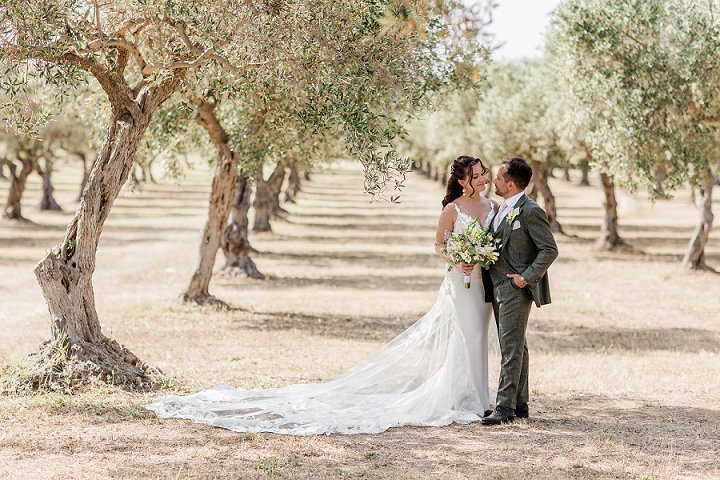
Milda and Marco’s ‘Quiet Elegance’ Outdoor Wedding in Sicily by Jurgita Lukos photography
Happy Friday everyone, I hope you have had a wonderful week so far? I am...


Happy Friday everyone, I hope you have had a wonderful week so far? I am...
19
Mar
2026

By Boho
In a fitting room, a bride stands pinned into a gown while relatives insist the dress has to be white, as if generations had always walked down aisles in the same pale fabric. Nearby, a stylist in a boutique for bridal gowns reaches for ivory before the bride has finished a sentence, though soft blue and champagne hang just behind her. Even the best bridal dress shop in Fort Lauderdale offers rows of mostly cream and white dresses, as if wedding color culture has barely changed since the nineteenth century.

White was around, but it was only one option. Not the rule. Some Christian families chose blue because it recalled the Virgin Mary. Others picked pale brocade because it looked expensive. One family might choose yellow because the local dyer handled it well. Another went with dark navy because it hid soot, dust, and wear. A bride in red or black did not seem strange. It usually just meant the dress fit the family’s means and the life around it.
On 10 February 1840, Queen Victoria married Prince Albert in a white satin gown trimmed with Honiton lace. That choice stood out. People expected richer color and heavier decoration from a royal wedding. But white showed the lace clearly. It was also photographed and illustrated well, which mattered more than it might have seemed at the time. The image spread. Once it reached the growing middle class, white stopped looking unusual and started to look desirable.
Shops noticed fast. Department stores and early bridal salons saw that pale gowns looked good in catalogs, in display windows, and later on film. So they kept showing the same picture until the white dress began feeling like the proper one. Mid-century movies pushed it further, dressing the gown in music, soft light, and emotion. Later still, magazines and etiquette writers added talk of purity. A commercial choice slowly picked up a moral story. That story lasted. Mostly because it was useful.
That old image still shapes bridal fashion, though it is not as fixed as it seemed in the past. White and ivory still lead, but many brides now choose a second look in another shade, often for a civil ceremony or an after-party. Designers are also showing blush, lavender, and silver besides classic ivory in newer collections. And mainstream coverage no longer treats red, floral, or multicolored gowns as shocking. The shift is quiet.

On the shop floor, the old story still appears first. Rails in big-city bridal districts, and in a typical bridal dress shop in Fort Lauderdale on a muggy afternoon, still begin with dense runs of ivory gowns. The shift hides just behind them in champagne tulle, latte silk that photographs as soft beige, blush organza, and even full black dresses waiting for warehouse parties. LOVU LOVU and similar boutiques keep those pieces close enough to white for family photos while giving each bride more room to move toward her own references. Not rebellion. Just a slow widening of the frame.
To keep the possibilities straight, it can help to think less about rules and more about four loose groups:

None of these cancel the others. The categories simply trace the space where personal taste meets old marketing and family expectations.
Inside actual fittings, history shows up as a suggestion more than a lecture. An aunt repeats that a white dress guarantees a “proper” wedding. A consultant, trained on years of lookbooks and runway shots, steers the conversation toward ivory ball gowns first, then offers color “if there is time.” Even the lighting in many boutiques is tuned to flatter pale fabrics. In that setting, a story that began as promotion for artisans in Victorian England can feel like timeless heritage instead of a preference carried down through engravings and film.
Local context keeps nudging that story away from a single shade. South Florida heat, beach ceremonies, and outdoor receptions invite lighter fabrics and stronger colors, so a Fort Lauderdale boutique that stocks coral, silver, or sea-glass green dresses is simply matching weather and light rather than breaking tradition. A second-look dress in a bright color for a yacht party, paired with a simpler white gown for the ceremony, lets a bride keep the photograph relatives expect while still seeing herself in the mirror, a pattern replicated in many cities as color reaches the dance floor first and the altar later.
Editors at Vogue’s wedding dress edit underline this shift by spotlighting bias-cut slips, tailored suiting, and short hemlines alongside princess gowns, so the “right” bridal look now depends less on color and more on movement, setting, and fit. Sustainability is folded into the picture, framing thrifted gowns, re-dyed dresses, and rentals as normal choices and opening space for unusual shades designed to live beyond a single day, quiet pressure on a myth that formerly felt unshakeable. Trends, personal stories, and practical concerns now run together, applying quiet pressure on a myth that once seemed to be unshakeable. All running in parallel.

From a distance, the white wedding dress looks ancient, as if every aisle had always been lined with ivory tulle. Up close, the story narrows to one royal wedding in 1840, amplified by lace makers, catalogs, film studios, and copywriters until a preference began to pass for law. Brides in black wool, red silk, blue brocade, and yellow taffeta were always there, simply edited out of the highlight reel. As modern couples choose sustainable fashion, multiple outfits, and culturally rooted garments, the fitting room becomes less a chapel to one shade and more a studio in which tradition can be kept, questioned, or repainted.
Share this post



This site uses Akismet to reduce spam. Learn how your comment data is processed.




Comments