Featured Post

Sophie and Zak’s Pretty Pastel Spring Barn Wedding in York by Fabio Photography
Today we head to York for this pretty pastel spring wedding, full of smiles, flowers...


Today we head to York for this pretty pastel spring wedding, full of smiles, flowers...
7
Jan
2026

By Boho
The round diamond held its ground for decades. It was the default, the safe pick, the shape everyone assumed they wanted until they tried something else on. That assumption is fading. In 2022, round cuts dominated at 59% of engagement ring purchases while ovals sat at 21.5%. By 2025, according to the Queensmith 2026 Engagement Ring Trends Report, rounds dropped to 36% and ovals climbed to 33%. The gap is nearly closed. Couples are choosing differently now, and the reasons behind that choice are practical, aesthetic, and financial.
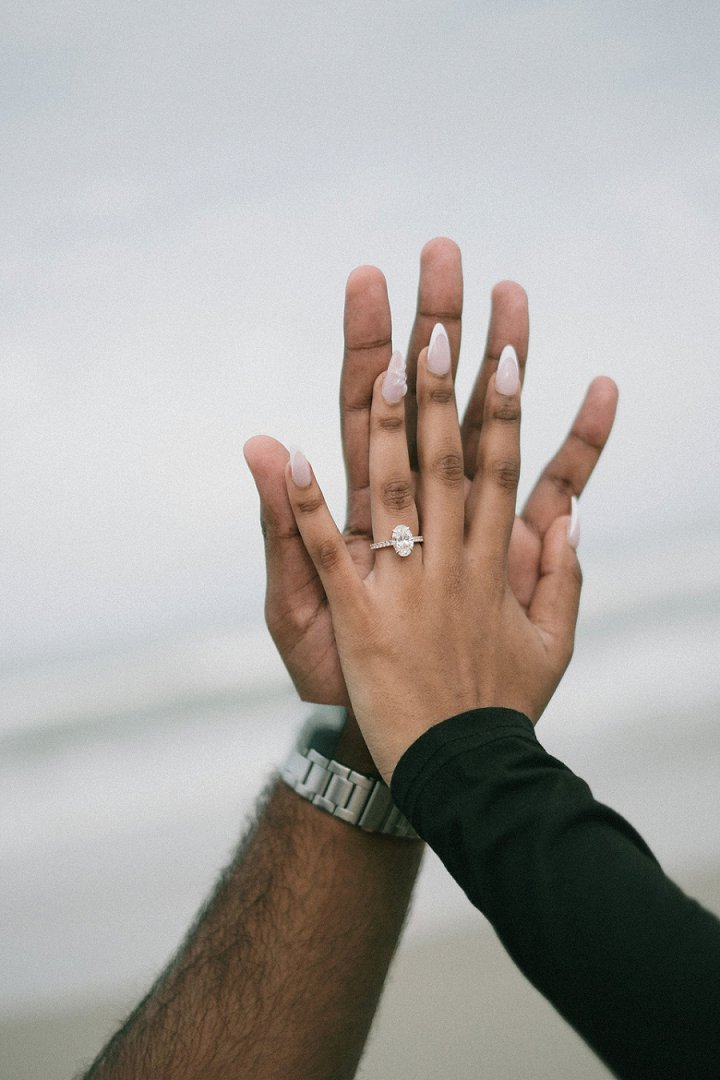
Oval diamonds cost less than rounds of comparable size. Info Diamond reports the difference ranges from 15 to 25% lower pricing. Petra Gems places the discount between 2 and 10%. Blue Nile data from Gem Society shows a 1-carat round averaging $2,275 while a 1-carat oval averages $1,709. That is $566 in savings for the same carat weight.
The price gap exists because of how diamonds are cut from rough stone. Ovals retain more carat weight during the cutting process. PriceScope confirms this efficiency makes them more cost-effective per carat. For couples working within a budget, that efficiency translates directly into either savings or the ability to purchase a larger stone.
This focus on value is also contributing to growing interest in lab-grown engagement rings Australia, with many couples seeking larger-looking stones and customised designs while keeping their overall budget in check. As buyers become more informed about their options, cost efficiency is playing an increasingly important role in engagement ring decisions.
The way a diamond sits on your finger changes how your hand appears in photographs and in person. Pear cuts draw the eye toward the fingertip. Marquise stones stretch horizontally or vertically, depending on orientation. Emerald cuts add a geometric quality that suits angular hands. Among these options, oval shaped rings produce a lengthening effect that balances shorter or wider fingers without overwhelming the hand. Taylor & Hart notes this elongated silhouette flatters a range of proportions, which partly explains why ovals now account for 15% of their sales.
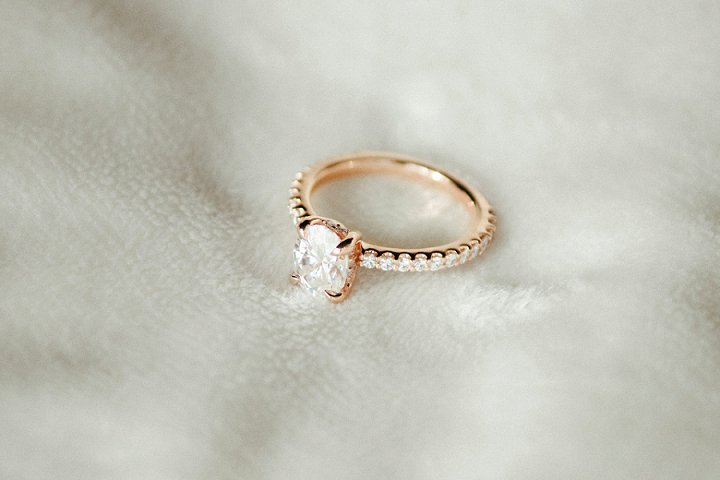
Compare an oval and a round diamond at identical carat weights. The oval will look bigger. This happens because the oval has a larger face-up surface area. The stone spreads across a more visible space when viewed from above. Serli and Siroan points out this visual advantage appeals to couples who want maximum presence without increasing costs. You get more apparent size for your money.
Hailey Bieber wears an oval. Kourtney Kardashian wears an oval. Blake Lively wears an oval. These are not coincidences. Natural Diamonds reported in December 2025 that Cristiano Ronaldo proposed to Georgina Rodríguez with a 30-carat oval ring estimated at $3 million. Simu Liu proposed to Allison Hsu with a 10-carat oval set on a simple gold band. Lady Gaga’s 10-carat oval made headlines and was covered by the Zoe Report. Phoebe Dynevor’s ring features a large oval in 18k yellow gold, as noted by Peter Norman’s 2025 coverage.
These public figures did not invent the trend. They amplified it. Social media feeds show these rings repeatedly, and the exposure reinforces buyer interest.

Oval stones fit multiple settings. Solitaires work. Hidden halos work. Three-stone designs work. East-west orientations, where the stone sits horizontally rather than vertically, have grown 35% year-over-year according to Accio’s 2025 analysis. Who What Wear’s trend coverage for 2025 and 2026 notes a movement toward hybrid designs that blur the line between engagement and wedding ring aesthetics.
The solitaire remains popular, but buyers are adding subtle modifications. Knife-edge bands, unique prong shapes, and hidden halos underneath the stone add distinction without overwhelming the design.
Oval diamonds have no pointed corners. This matters for people who work with their hands or lead active routines. Pointed shapes like marquise or princess cuts carry higher risk of chipping at the tips. The curved edges of an oval reduce that risk. Wear and damage become less likely over time.

Straits Research valued the global wedding ring market at $84.91 billion in 2024 with projections reaching $140.20 billion by 2033. Diamonds remain the dominant gemstone, preferred by 87% of respondents. Among women, 43% prefer round cuts and 15% prefer ovals. That 15% is growing.
The Knot’s 2024 Jewelry and Engagement Study found 77% of proposees had involvement in selecting their ring. Couples are making these decisions together, and they are choosing shapes that suit their tastes rather than defaulting to convention.
Round diamonds remain classics. They maximize brilliance due to their symmetrical facet arrangement. They match every setting style. They carry no risk of looking dated. Buyers who prioritize tradition and maximum light return will continue choosing rounds.
But tradition alone is not driving purchases anymore. Buyers want shapes that photograph well, flatter their hands, and offer value. Ovals check those boxes.

If you buy an oval, pay attention to the length-to-width ratio. Ratios between 1.35 and 1.50 are typical. A higher ratio creates a more elongated shape. A lower ratio appears closer to round. Neither is correct. It depends on what looks right to you.
Bow-tie effect is another consideration. Most ovals show a dark bow-tie pattern across the center when viewed face-up. Slight bow-ties are normal. Heavy bow-ties reduce brilliance. Examine the stone in person or request high-quality video if buying online.
Color and clarity grades apply to ovals the same way they apply to other shapes. Ovals can show color more visibly near the tips, so buyers often select one color grade higher than they would for a round.
Oval engagement rings offer a combination of visual size, hand-flattering proportions, lower cost per carat, and durability. Celebrity endorsement has raised awareness, but the practical advantages sustain interest. Couples planning engagements in 2026 will find ovals positioned as a logical choice rather than a passing preference.
The round diamond is not disappearing. It will remain a staple. But the oval has closed the gap, and the data suggests it will continue gaining ground.

This site uses Akismet to reduce spam. Learn how your comment data is processed.


Comments